
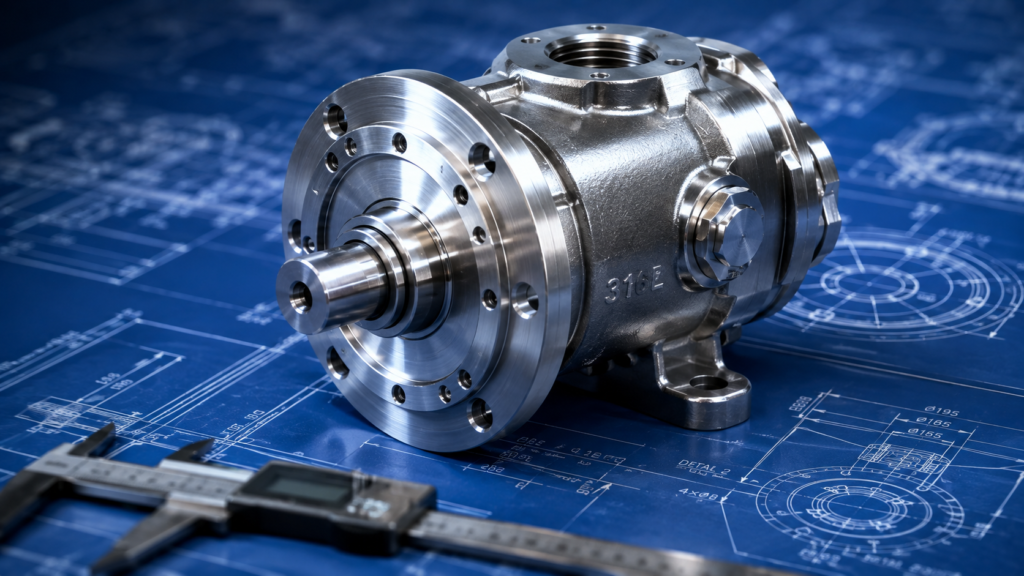
How to Select Pump Head for Industrial RO Systems
Introduction
As the Chief Pump Engineer, I approach the specification of industrial reverse osmosis (RO) pump heads
purely through the lens of fluid mechanics, material science, and thermodynamic efficiency. For international B2B buyers, water treatment engineers, and facility managers, sourcing the correct pump head is not a matter of brand preference—it is a strict calculation of flow rate (GPM/LPM), operating pressure (PSI/Bar), Total Dissolved Solids (TDS) compatibility, and cavitation resistance. Below is the definitive technical guide for specifying and sourcing industrial RO system pump heads, grounded in engineering principles and international standards.
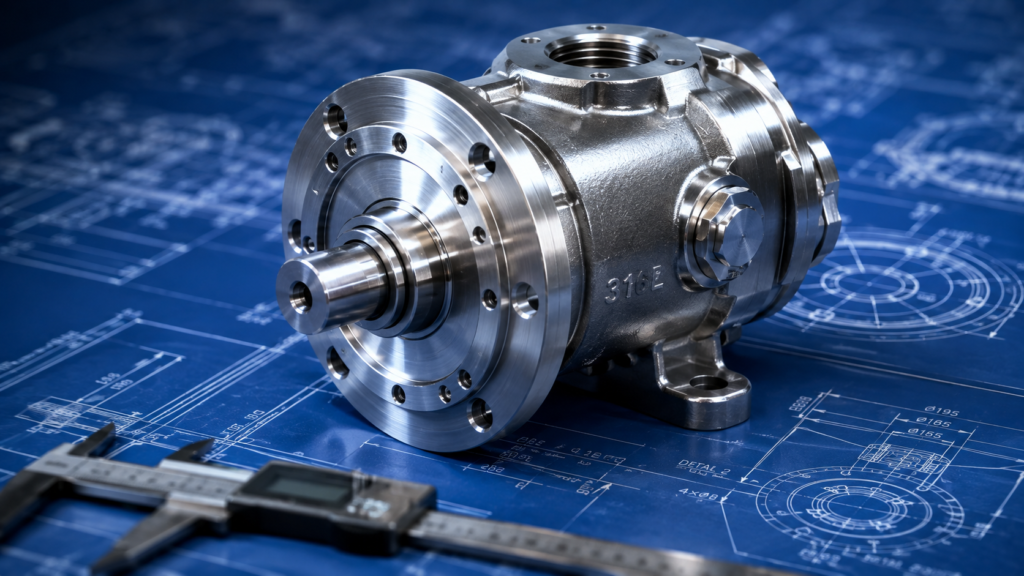
Pain Point
In an industrial RO system, a failure in the high-pressure pump head—whether through seal degradation,
casting porosity, or fatigue—results in immediate head loss, reduced permeate yield, and potential membrane
fouling. International procurement officers often encounter systemic failures by overlooking
engineering nuances. Choosing the lowest bidder frequently results in compromised material
composition (e.g., receiving 304 SS labeled as 316L) or skipped quality control steps, leading to catastrophic
facility downtime. Selecting a pump head based strictly on maximum pressure rather than the Best
Efficiency Point (BEP) curve accelerates radial load fatigue and premature failure.
Engineering Analysis
Proper pump head sizing requires calculating the exact hydraulic power required to maintain RO membrane
flux . The high-pressure pump head serves as the primary pressure boundary and fluid displacement
mechanism, converting mechanical shaft energy into kinetic and pressure energy to overcome natural osmotic
pressure.
Flow Rate and Pressure Calculation
The hydraulic power required by the pump head is dictated by the fundamental fluid mechanics formula :
Ph = (ρ × g × Q × H) / η
Ph = Hydraulic power
ρ = Fluid density (kg/m³) — adjust for seawater vs. brackish water
g = Acceleration due to gravity (9.81 m/s²)
Q = Volumetric flow rate (m³/s)
H = Total dynamic head (m)
η = Pump head hydraulic efficiency
Cavitation Prevention (NPSH)
A critical fluid dynamics failure mode in RO pump heads is cavitation. This occurs when the static
pressure of the feedwater drops below its vapor pressure, causing vapor bubbles to form and violently
collapse against the pump head’s internal components. To prevent this, the Net Positive Suction Head
available (NPSHa) must always exceed the required Net Positive Suction Head (NPSHr) specified by the
manufacturer :
NPSHa = (Pi – Pv) / (ρ × g) + v² / (2g) > NPSHr
Technical Evaluation
High TDS environments—particularly those rich in chlorides—have a profound impact on pump head
durability . Evaluating the fluid dynamics involves analyzing how fluid salinity and temperature dictate
the necessity for specific material grades . Standard pump heads often fail rapidly in brackish (TDS >
5,000 ppm) or seawater (TDS > 35,000 ppm) applications without proper technical evaluation of pitting
resistance. Pitting resistance in stainless steels is measured by the Pitting Resistance Equivalent
Number (PREN)
PREN = %Cr + 3.3 × %Mo + 16 × %N
Option Comparison
Based on the PREN and expected Total Dissolved Solids (TDS), the following materials present the standard
comparative matrix for RO pump heads :
| Material | PREN Index | Max Recommended TDS (ppm) | Primary Use Case | Working Mechanism / Pros & Cons |
|---|---|---|---|---|
| Brass / Bronze | N/A | < 1,000 | Low-pressure tap water RO | Prone to dezincification in acidic water. Unsuitable for industrial RO. |
| 304 Stainless Steel | ~18.0 | < 2,000 | Light commercial RO | Adequate for low-chloride environments; vulnerable to stress corrosion. |
| 316L Stainless Steel | ~25.0 | < 10,000 | Brackish Water RO (BWRO) | Industry standard for industrial components. High molybdenum adds chloride resistance. |
| Duplex 2205 / 2507 | 35.0 – 42.0 | > 35,000 | Seawater Desalination (SWRO) | Superior tensile strength and immunity to chloride-induced stress corrosion cracking (SCC). |
| Engineered Plastics (Noryl/ PPS) | N/A | Variable (Temp limited) | Chemical dosing / Pre-treatment | Excellent chemical resistance but limited by maximum pressure ratings and structural fatigue. |
Risk Control
Risk mitigation in fluid handling requires proactively addressing potential modes of failure, specifically related
to corrosion and multi-stage pump mechanics .
Galvanic Corrosion: Occurs when two dissimilar metals (e.g., a brass fitting on a 316L pump head) are
submerged in an electrolyte (high TDS water) . The less noble metal acts as an anode and
deteriorates rapidly.
Crevice Corrosion: Frequently observed under the O-rings and mechanical seals of poorly machined
pump heads .
Axial Thrust Management: Multi-stage pump heads must safely distribute the axial thrust generated by
multiple impellers . Ensure the replacement head matches the original balancing drum or thrust
bearing specifications.
Seal Material Compatibility: Elastomeric seals form the critical barrier. EPDM is excellent for
water but fails rapidly exposed to petroleum-based oils . Viton (FKM) offers superior chemical
resistance for complex wastewater recovery streams containing hydrocarbons.
•
Procurement Preparation
Sourcing reliable industrial fluid machinery demands strict supply chain protocols across vendor qualification,
engineering verification, and logistics.
1. Vendor Qualification & Auditing
Prioritize suppliers with documented experience exporting high-pressure fluid handling equipment [cite: 1].
Factory audits should focus on multi-axis CNC machine availability, dedicated hydrostatic testing beds, inhouse
spectrometers, and raw material segregation.
2. Engineering Verification
Before PO finalization, mandate an EN 10204 3.1 Material Test Certificate for every batch to trace chemical
composition to the original heat number. A rigorous drawing review must finalize dimensional
tolerances and required surface finishes (Ra values).
3. Production & Logistics Execution
☑ Issue RFQ with exact operating conditions (not just max ratings).
☑ Approve engineering drawings, ISO certifications, and material specs.
☑ Execute third-party Pre-Shipment Inspection (PSI) including Positive Material Identification (PMI) via XRF
scanner.
☑ Ensure packing utilizes fully enclosed, ISPM 15 compliant fumigated wooden crates with Volatile Corrosion
Inhibitor (VCI) bags.
ROFLOW Recommendation
Engineering Standards & Quality Control
To mitigate systemic failures, B2B procurement teams must ensure that manufacturing adheres to
ROFLOW Quality Control and Manufacturing Standards. This includes dictating strict tolerances
for surface roughness on all wetted parts to prevent crevice corrosion. Manufacturers must test
to ISO 9906 (Rotodynamic pumps – Hydraulic performance acceptance tests) and utilize materials
certified to NSF/ANSI 61 for safe drinking water components . Mandate hydrostatic pressure
testing (typically at 1.5x maximum working pressure) prior to export with zero leakage tolerance.
FAQ
No. Standard pump heads will suffer rapid chloride-induced pitting. Brackish water requires a
minimum of 316L SS, while seawater strictly mandates Duplex or Super Duplex stainless steel.
How often should an industrial RO pump head be replaced?
Replacement frequency is not time-based but condition-based. Under ideal operating conditions
(stable NPSH, clean fluid, proper BEP operation), a 316L SS pump head can last 50,000+ operating hours. Regular vibration analysis and mechanical seal inspections should dictate replacement intervals .
Can I use a standard pump head for brackish water or seawater RO?
No. Standard pump heads will suffer rapid chloride-induced pitting. Brackish water requires a
minimum of 316L SS, while seawater strictly mandates Duplex or Super Duplex stainless steel.
What causes cavitation in high-pressure RO pump heads?
Cavitation is typically caused by insufficient feed pressure from the pre-treatment stage, a clogged pre-filter, or
operating the pump at a flow rate significantly beyond its design curve . This causes localized pressure
to drop below the water’s vapor pressure .
How do seal materials (like EPDM or Viton) affect pump head longevity?
Elastomeric seals form the critical barrier between the high-pressure fluid zone and the atmosphere .
Selecting the wrong material causes the seal to swell, extrude, and fail, leading to massive internal leaks and
potential damage to the pump shaft .
Need a Custom Pump Configured for Extreme Conditions?
Send us your fluid viscosity, flow rate, and temperature limits. Our independent engineers will audit your specs and secure your supply chain.
Related Articles
ROFLOW Quality Control and Manufacturing Standards
Guide to Industrial RO System Maintenance