
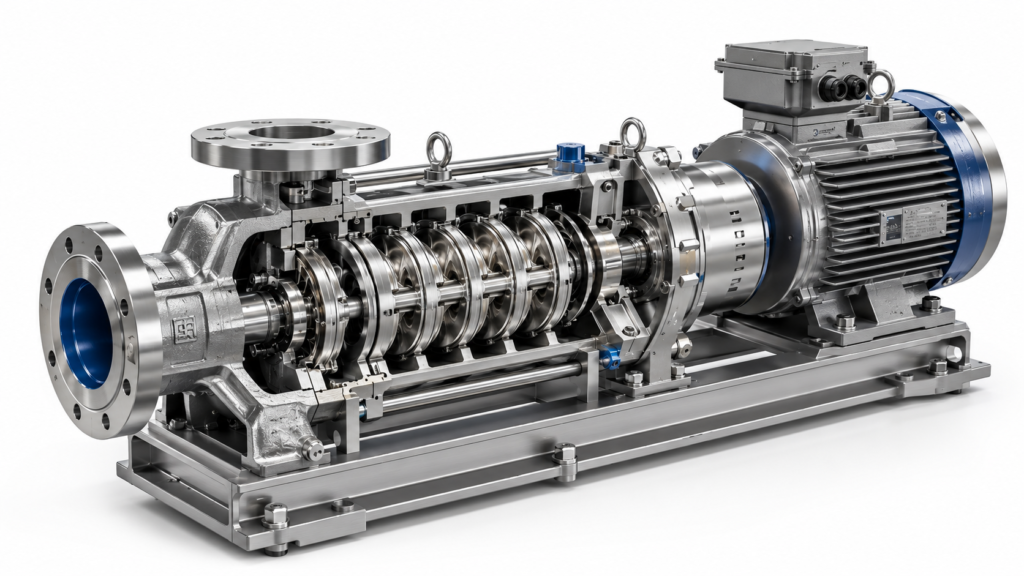
How Can I Select the Right High-Pressure Pump for My Industrial RO System?
Selecting the wrong high-pressure pump for an industrial reverse osmosis (RO) system doesn’t just reduce permeate production—it directly leads to rapid membrane fouling, catastrophic mechanical seal failure, and massive energy waste.
Many procurement managers ask: “Do I really need a highly customized multistage pump, or can a standard water pump work?” If your system operates continuously (24/7), requires high discharge pressure (over 150 PSI), and handles brackish or seawater with high TDS (Total Dissolved Solids), a standard utility pump will fail within months.
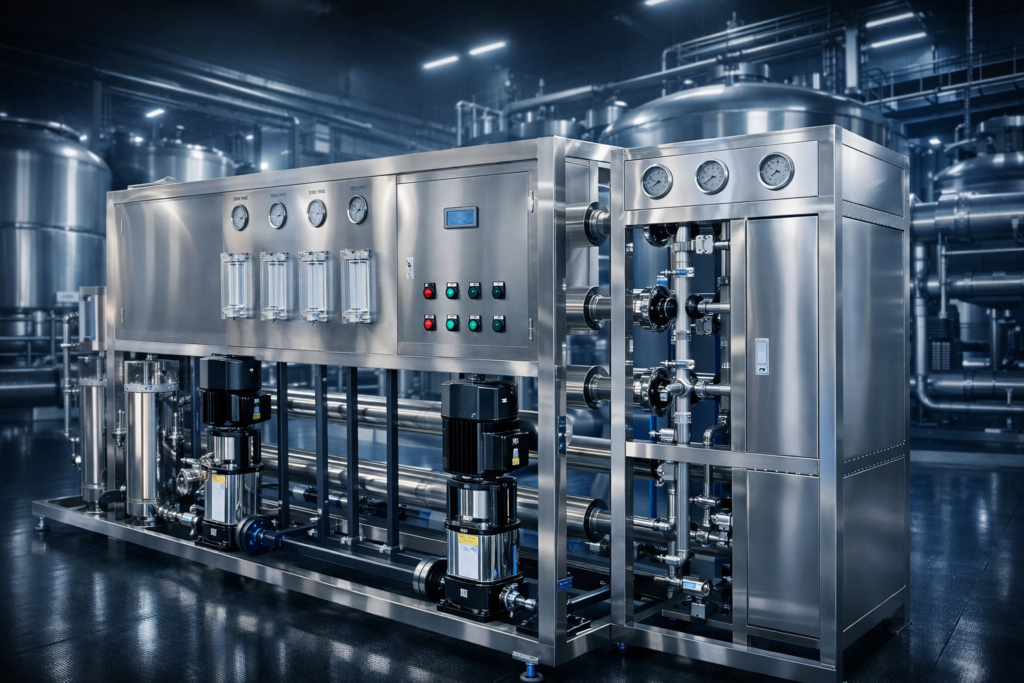
Material Selection Benchmark: Chloride Concentration Limits
Never select pump materials based purely on "water type." Base it on the exact chloride concentration in your fluid MSDS:
| Material Grade | Chloride Limit | Application Note |
|---|---|---|
| Standard 304 Stainless Steel | < 50 ppm | Only suitable for pure tap water / RO water |
| 316L Stainless Steel | < 250 ppm (ambient temp) | Standard for mild brackish water |
| Duplex Stainless Steel (2205) | Up to 1,000 ppm | Excellent resistance to Stress Corrosion Cracking (SCC) |
| Super Duplex (2507) | > 2,000 ppm | Mandatory for seawater desalination (SWRO) |
The Deadliest Mistake: Oversizing the RO Pump
OEM manufacturers often add a 20% “safety margin” to their flow and head requirements. In an RO system, an oversized pump operates far from its Best Efficiency Point (BEP). This causes radial thrust, leading to severe shaft deflection, premature bearing failure, and excessive vibration. Always match the pump’s BEP precisely with your system curve.
Technical Data Required for a Precision Quote
Before contacting a Chinese supply chain partner, prepare this data to eliminate engineering guesswork:
Required Permeate Flow Rate & Recovery Rate
Total Dynamic Head (TDH) – including membrane pressure drop
Complete Water Analysis Report (Specifically Chloride, pH, and Temperature)
Available Voltage & Frequency (e.g., 400V/50Hz vs. 460V/60Hz)
OEM Field Experience
A water treatment OEM in the UAE experienced repeated pitting corrosion on their 316L multistage pumps due to local groundwater reaching 35°C with 400 ppm chlorides. By re-evaluating the system chemistry, we upgraded the wet-end materials to Duplex 2205 and optimized the impeller trim. This eliminated corrosion downtime and reduced overall procurement replacement costs by 18% annually.
ROFLOW Engineering Recommendation
For industrial RO applications exceeding 150 PSI and 250 ppm chlorides, we strongly recommend abandoning standard 316L. Specify Duplex 2205 for the pump casing and impellers, combined with a Flushed Double Mechanical Seal (FKM elastomers) to prevent dry-running during membrane flushing cycles.
How long will a 316L RO pump last?
Under ideal conditions (<250 ppm chlorides, neutral pH), it can last 10+ years. If misused in high-chloride brackish water, pitting corrosion can destroy it in under 6 months.
Can I use EPDM O-rings for RO water?
Yes, EPDM is excellent for standard RO water. However, if your CIP (Clean-in-Place) process involves highly aggressive chemicals or oils, FKM (Viton) is required.
Should I oversize my RO high-pressure pump?
No. Oversizing pushes the pump off its BEP, causing vibration, mechanical seal leakage, and wasted energy. Size it accurately to your system curve.
Why is my RO pump cavitating?
Cavitation usually occurs due to insufficient Net Positive Suction Head Available (NPSHa). Check if the pre-filter is clogged, causing a pressure drop at the pump inlet.
What is the difference between Vertical and Horizontal Multistage Pumps for RO?
Vertical pumps save floor space (crucial for skid-mounted OEMs), while horizontal pumps are easier to maintain without disconnecting complex piping.
How often should I check the mechanical seals?
Inspect visually for leaks weekly. In continuous 24/7 operation, plan for a preventative seal replacement every 12 to 18 months.
Is Duplex 2205 worth the extra cost over 316L?
If your water has high chlorides or temperatures above 35°C, absolutely. The prevention of one unscheduled shutdown easily covers the material upgrade cost.
What are the installation requirements for an RO pump?
Ensure a completely flat, rigid baseplate to prevent misalignment. Always install a pressure relief valve on the discharge line to protect the membrane.
What factory tests are required before shipping??
A rigorous Hydrostatic Pressure Test and a Hydraulic Performance Test (Flow/Head/Efficiency) to ensure it meets the quoted curve.
What is the typical lead time for custom RO pumps from China?
Standard configurations take 2-3 weeks. High-alloy materials like Duplex or customized VFD integrations typically require 5-7 weeks.
Need a Custom Pump Configured for Extreme Conditions?
Send us your fluid viscosity, flow rate, and temperature limits. Our independent engineers will audit your specs and secure your supply chain.