
1. Introduction: The “Price Tag” Illusion
In the industrial fluid sector, a pump’s purchase price represents only 10% of its Total Cost of Ownership (TCO). The other 90%? Energy and maintenance.
Many procurement managers celebrate a 30% discount on a Chinese D-Type Multistage Pump, only to face catastrophic mechanical seal failures and plummeting efficiency within 6 months.
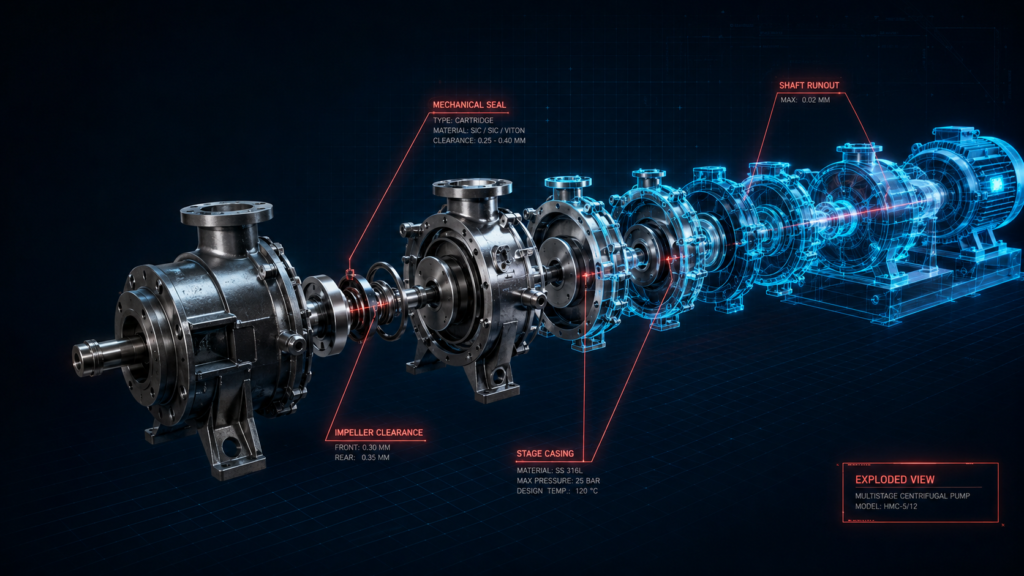
Today, we are opening the “black box.” Using real engineering blueprints, I will reverse-engineer a standard D-Type boiler feed/water supply pump to show you exactly where cheap manufacturers cut their costs—and why you end up paying for it.
2. Anatomy of a Compromise: 4 Places Manufacturers Cut Corners
Cut #1: Stage Casings and Seal Rings – The Internal Hemorrhage
The Engineering Concept:
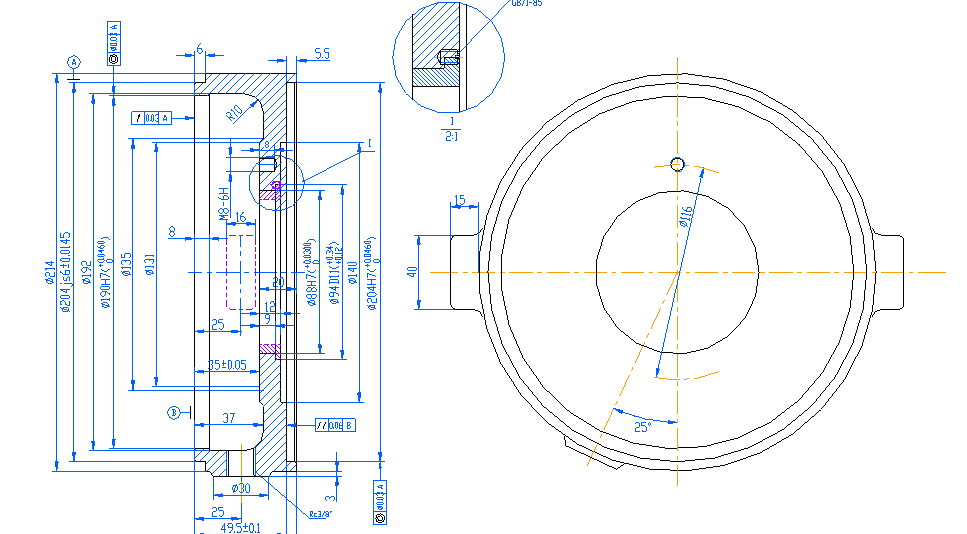
In a classic ring-section multistage pump, pressure builds incrementally across each stage. The water is guided from the first-stage impeller into the next via the stage casings . The only thing preventing high-pressure fluid from bleeding back into the low-pressure zones are the precision seal rings tightly fitted between the rotating impellers and the stationary casings.
The Manufacturer’s Trick:
This is a prime target for cost-cutting. To lower casting costs, budget suppliers thin out the walls of the stage casings and use lower-grade cast iron. More critically, they widen the gap tolerances on the seal rings because achieving a tight, uniform clearance requires multiple passes on high-end CNC lathes.
The Catastrophic Result:
Under the immense internal pressure of a multi-stage operation, those thinned-out stage casings suffer from micro-deformation. Combined with the already sloppy seal ring clearances, you experience massive “internal recirculation.”
The pump looks like it’s running fine on the outside, but inside, a significant percentage of your fluid is just spinning in circles. Your flow rate () drops, your head () falls short of the curve, and your energy efficiency plummets. You end up paying for a 45kW motor to do the work of a 30kW system, bleeding electricity costs every single hour.
Cut #2: The Rotor Assembly and Shaft Deflection
The Engineering Concept:
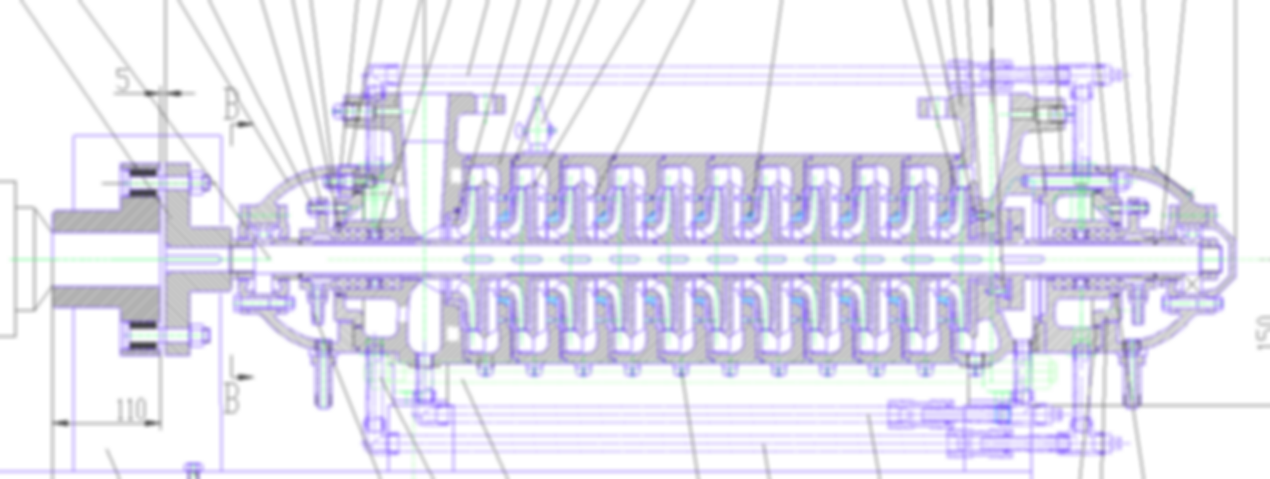
A multistage pump relies on a single, long central pump shaft supporting multiple impellers (from the first-stage to the secondary stages). This entire rotating core is known as the Rotor Assembly (转子部件). Because the shaft is exceptionally long, maintaining absolute concentricity across the entire length is mechanically demanding.
The Manufacturer’s Trick:
High-quality shafts require stress-relief heat treatments and final precision grinding to ensure runout tolerances are kept to an absolute minimum. Cheap manufacturers skip the heat treatment and use unrefined carbon steel. They also cut corners on the stuffing box (填料函体) and bearing housing alignments.
The Catastrophic Result:
Without proper heat treatment and precision grinding, the long pump shaft will naturally bow under operational load—a phenomenon known as “shaft deflection.”
At 2900 RPM, a bowing shaft acts like a whip inside your pump. This constant, aggressive radial vibration destroys the mechanical seals almost immediately, leading to chronic leaking. Worse, it transfers immense stress to the bearings. Even if they install a cooling water chamber (水冷腔盖) to manage the heat, the sheer mechanical violence of a deflected shaft will tear the bearings apart long before their rated lifespan. You aren’t just buying a cheap pump; you are buying a scheduled maintenance disaster.
Cut #3: The Balancing Apparatus & Piping System – The Invisible Ticking Time Bomb
The Engineering Concept:
To understand this, you just need to understand basic forces. When a D-Type multistage pump pushes water through several impellers at high pressure, it generates a massive physical force that violently pushes the entire shaft backwards (axial thrust).
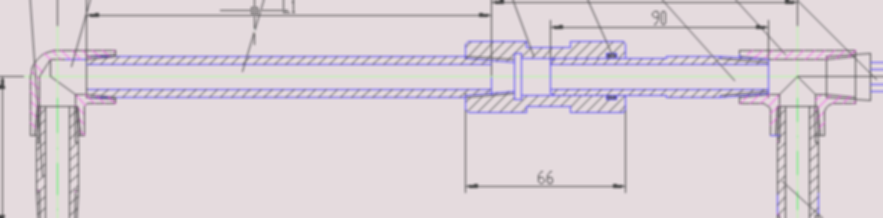
To neutralize this, engineers design a precise Balance Disk at the tail end, supported by a dedicated Balance Water Pipe System (平衡水管部件). This external piping routes high-pressure fluid back to the low-pressure suction side, creating a continuous hydraulic loop that keeps the spinning shaft perfectly suspended and stable.
The Manufacturer’s Trick:
This delicate equilibrium is the first casualty of price-cutting. Cheap suppliers not only use untreated carbon steel for the balance disk (skipping the necessary precision CNC grinding), but they also compromise on the external loop. They use thin-walled tubes for the balance pipes and low-grade
Balance Pipe Connection Sleeves (平衡管联接套) that cannot withstand sustained high-pressure pulsation.
The Catastrophic Result:
Because the balance disk material is soft, it wears out prematurely. Simultaneously, if those cheap balance pipes clog or the connection sleeves leak under pressure, the entire hydraulic balancing loop fails instantly.
Once that pressure equilibrium is lost, the procurement manager’s worst nightmare begins. The entire rotating assembly violently shifts backwards. Metal impellers slam into the stationary casings at 2900 RPM. You get metal-on-metal destruction, seizing the pump instantly and often burning out the electrical motor.
That “fantastic” 30% discount? It just evaporated into total equipment replacement and days of emergency downtime. At ROFLOW, we don’t just inspect the major castings; we audit the micrometric friction clearances of the balance disk and the pressure ratings of every single balance pipe connection. We know that a millimeter of compromise here costs you thousands of dollars later
Cut #4: Skipping Assembly Balancing & Flimsy Baseplates – The Resonance Trap
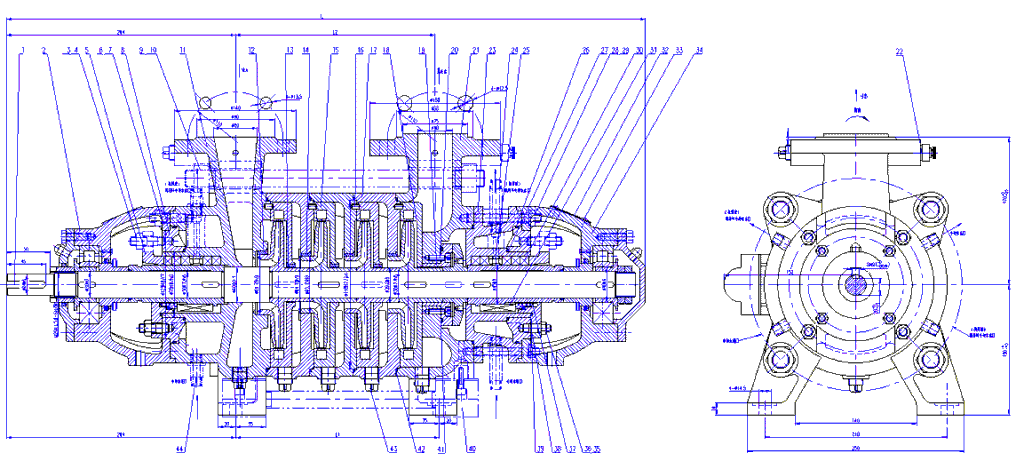
The Engineering Concept: A multi-stage pump isn’t just a collection of parts; it’s a high-speed dynamic system. As water passes from the First-Stage Impeller (首级叶轮) to the Secondary Impellers (次级叶轮), any slight imbalance multiplies. Furthermore, the massive rotational torque from the electrical motor must be securely anchored by a heavy-duty, perfectly flat Baseplate (底座) to keep the motor shaft and pump shaft in absolute alignment.
The Manufacturer’s Trick: To push orders out the door fast, budget suppliers might briefly balance individual impellers, but they completely skip putting the fully assembled Rotor Assembly (转子部件) on a dynamic balancing machine. To compound the disaster, instead of using a rigid, stress-relieved cast baseplate, they weld together thin, hollow steel channels that look fine in photos but lack structural mass.
The Catastrophic Result: When you power up the pump, the unbalanced rotor assembly creates a violent harmonic resonance. Because the cheap, lightweight baseplate lacks the rigidity to absorb these vibrations, the entire unit shakes.
Under this stress, the motor and the pump lose their precise alignment. The coupling connecting them will be shredded to pieces within weeks. You will suffer from chronic bearing failures, shattered mechanical seals, and extreme noise pollution on your factory floor
At ROFLOW, we don’t just sell pump ends. We engineer complete packages. We demand full-speed dynamic balancing of the entire rotor assembly and utilize heavy, torsion-resistant baseplates so that when you bolt our pump to your concrete floor, it runs dead smooth for years.
The Math: Calculating Your Real Energy Losses
Let’s look at the physics. When manufacturers widen internal clearances to hide poor machining tolerances, the pump’s hydraulic efficiency () plummets.
The electrical power consumed by your pump is calculated as:
Where:
= Power consumed (kW)
= Flow rate ()
= Head (m)
= Pump efficiency
If a cheap pump’s efficiency drops from 75% to 65% due to internal backflow (recirculation) and poor surface finish, it consumes roughly 15% more electricity every single hour it runs. Over a 5-year continuous operation cycle, the wasted electricity bills will be enough to buy three premium pumps.
Conclusion: Don’t Buy a Catalog Number, Buy Engineered Reliability
A D-Type multistage pump is not a generic plumbing fixture; it is a high-speed, precision-engineered machine.
The ROFLOW Methodology: When you partner with us, we don’t just quote you a price based on a photo. We audit the foundry’s casting materials, verify the CNC machining tolerances, and demand strict dynamic balancing reports before the pump ever ships.
Facing a fluid challenge? Stop guessing with your procurement.
Send us your flow, head, and fluid properties. Let an engineer calculate your Best Efficiency Point (BEP) and audit your supply chain.
Book a Free Technical Sourcing ConsultationBook a Free Technical Sourcing Consultation